This is the third of the longer pieces I promised in the opening post of this series.
Every conversation about AI and photography I get pulled into turns out to be the same conversation, and it has started to bore me. Is it art. Who made it. Does a prompt count as work. Is it cheating. People argue it as though the ground were new, and the ground is not new at all. A while back I photographed the Artemis II launch off a screen - a deliberately oversaturated frame of the rocket sitting on the pad - and while I was wondering whether a glorified screenshot even deserves the word photograph, I remembered that eighty years ago the photography magazines ran how-to features on the best way to shoot your television set. Tips and tricks for artistic results. A quick search turns up a surprising number of recent ones too. The panic about what counts has been here the whole time, changing its clothes every decade, and I have run out of interest in it.
The question sitting underneath it is the one I wrestle with. Where does a photograph get its meaning?
Last year I was on a plane and held a water bottle up against the window. Crumpled, half full, the light coming through it and throwing two things onto the sill at once - a hard grey shadow and a bright smear of colour. I photographed it. Then, half playing, I handed the picture to Gemini and asked it to look with the mind of an artist and find the metaphor in it.

What came back was genuinely interesting. The bottle is a memory, held up to the light of the present. The shadow is the blunt fact that something happened - heavy, vague, undeniable. The refraction, the luminous distorted colour that only appears because you let the light pass through instead of blocking it, is what the experience came to mean, tinted with the colour of your own perspective. We are the hand in the frame, deciding which of the two to look at as we go.
I did not write that. A machine did, from a picture I had made. And I have been circling the uncomfortable part of it ever since, because the meaning in that image - the thing that lifts it above a snapshot of some plastic against a window - did not come from me pressing the button. It arrived in the reading. Handed, this time, to software.
There is an old and respectable way of thinking about art that says this is exactly right, and always was. The meaning was never sitting in the object. It gets assembled on the far side, by whoever is looking, out of everything they bring with them - and the maker is simply the person who supplied the occasion for it. Follow that all the way and you land somewhere clean and slightly chilling. If meaning is decided entirely by the audience, then it truly does not matter how the image came to exist. My afternoon of walking and waiting and noticing, or a sentence typed into a box, are the same thing as far as the picture is concerned. Both are occasions. The viewer does the rest.
I can hold that idea up and admire how tidy it is. I just cannot live inside it. Working out why is most of the reason this piece exists.
The great conversation
When I walk out to make street photographs in black and white, I am not starting from nothing. I am following the likes of Henri Cartier-Bresson whether I have him in mind or not, and he was following what he had learned as a painter before he ever picked up a camera, and that reached back through people he never met to people they never met.
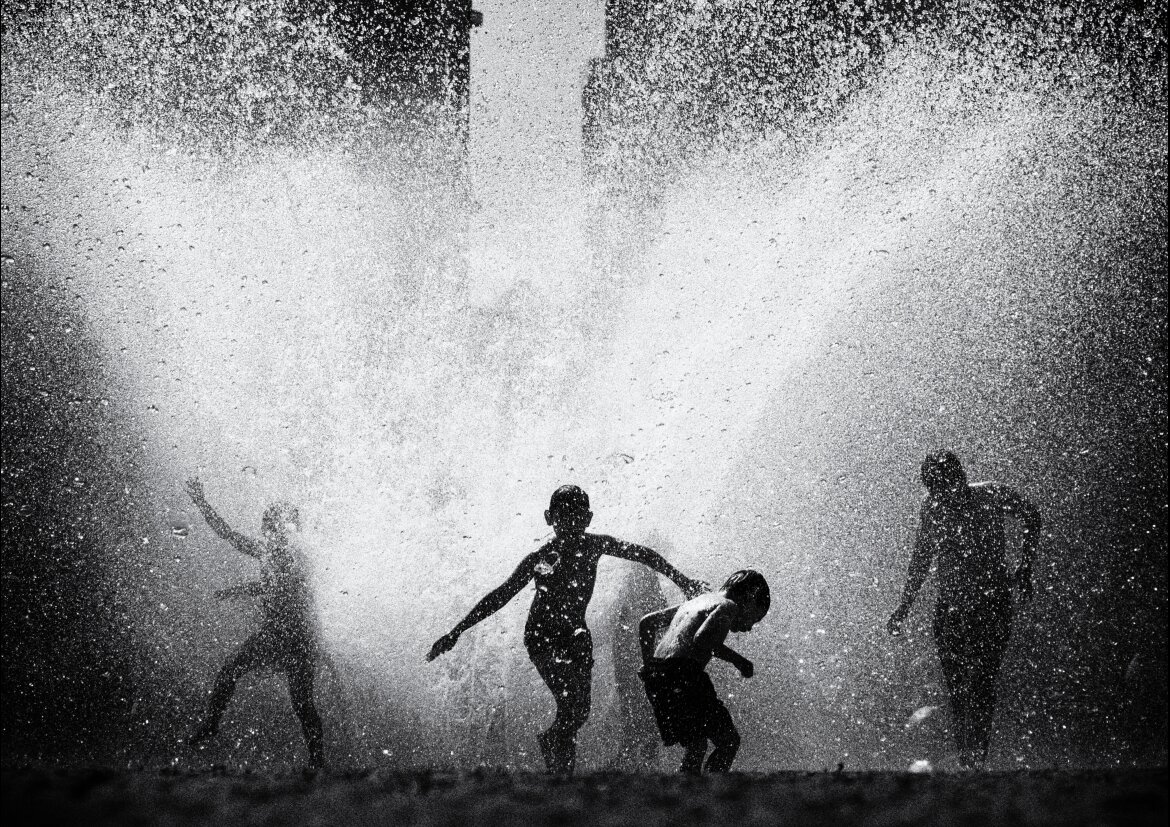
Every maker breathes in the conventions and the near-misses and the occasional triumphs of everyone who came before, keeps some, throws out the rest, and hands a slightly changed version forward. You do not even have to make anything to be part of it - look hard at a photograph, carry it around, let it change what you notice tomorrow, and you have already passed something on to whatever you make or admire next. The whole thing runs back in an unbroken line to somebody pressing ochre onto a cave wall by firelight, wanting another person to see what they had seen.
That is the conversation I mean, and when I hand over a zine or give away a print.
I am adding one small link to it and reaching toward whoever picks the thing up. It matters to me that what I hand over carries a bit of me. A decision. A way of seeing. The particular afternoon it came from, and the wish that it lands on somebody.
Here is where AI is genuinely new, and not in the way the is-it-art crowd means it. It is the first technology that can produce something which really does resemble artwork while carrying no original thought and no wish to reach anyone at all. And it can make those things faster than any of us can think a single one through, so the line starts filling with links that connect to nothing at either end - shaped exactly like a contribution, reaching toward no one. My own small link does not get refuted in there. It gets buried among a thousand things wearing its clothes. You can have something worth saying and still find yourself competing with a system that throws material at the wall until somebody yells stop and keeps whatever happened to land. The Caira, a camera that will swap your sky for a better one while you shoot, sits at the near edge of this for me. Nothing is wrong with the tool. I still mourn, a little, a world in which a photograph carried a real dependency on having been there - on patience, on the right moment, on some relationship to an actual person in front of or behind the lens. Every step away from that costs me a little motivation, and I have never quite argued myself out of the feeling.
Same box, two doors
And yet the water bottle was AI as well, and it did the reverse. It set me more firmly inside the conversation instead of crowding me out of it - it read my picture back to me and gave me something to think against. Another time I handed over a photograph of a conference stage in Shanghai and asked for a second frame that would combine with it into a double exposure, and what came back was a collaborator's suggestion, a move I then got to take or refuse or bend to my own ends. In both cases the picture stayed mine and the machine helped me mean something with it. The same technology, aimed in two opposite directions.
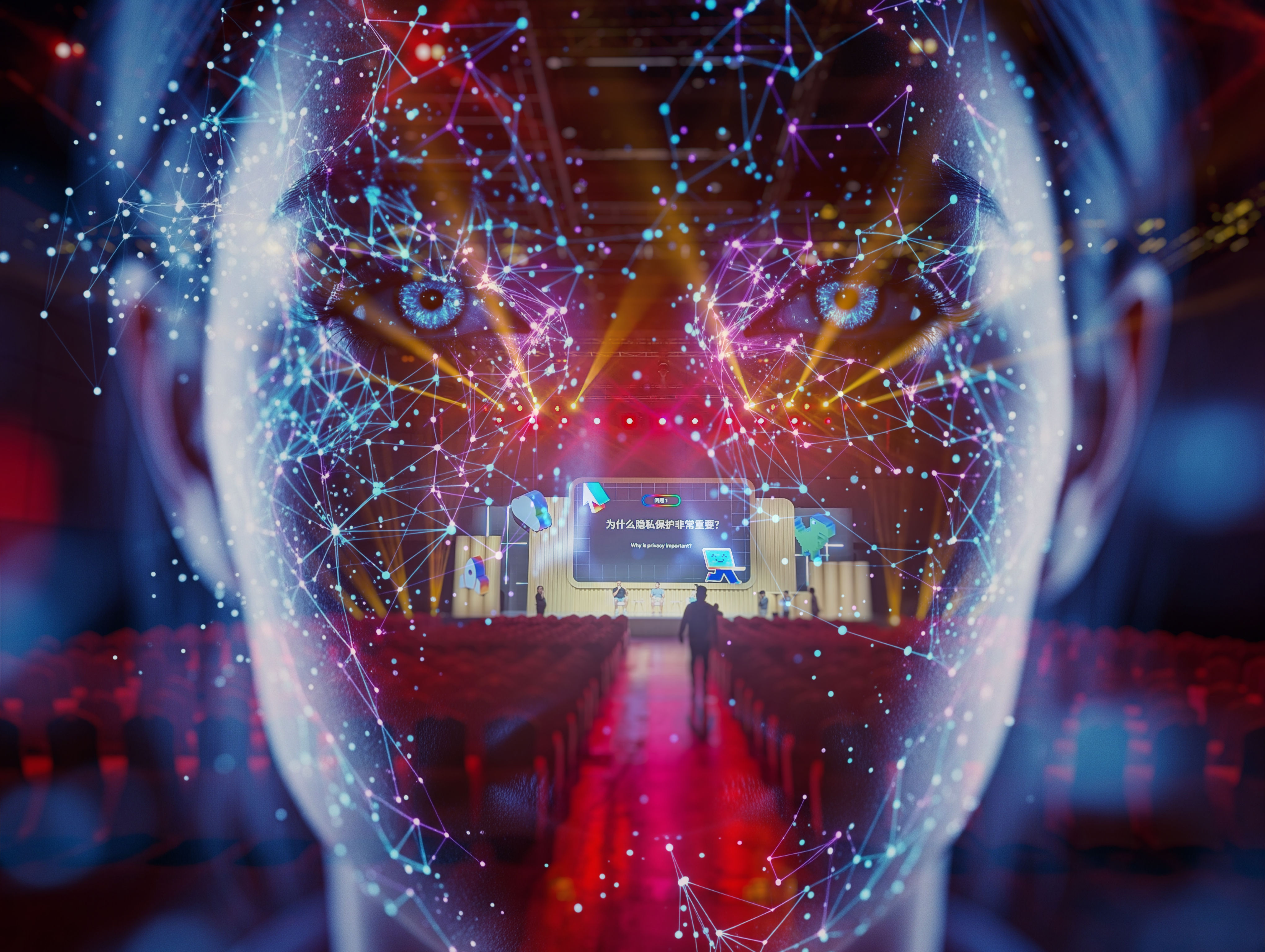
So I have stopped asking whether to use AI, which is really the fear-of-missing-out question wearing a serious face - everyone else is, the box is open, better hurry. I ask a narrower one now, each time, about the specific thing in front of me. Does this keep me in the conversation or stand in for me? Does it deepen what I am trying to say, or spare me the work of saying it? A tool that reads my work back to me, or hands me a panel to react to, keeps me at the table. A tool that would have made the picture so that I did not have to shows me the door, very politely. Same box, two doors, and the only thing that settles which one I go through is whether I had something to say before I opened it.
I have been toying with making the next zine out of precisely this. The water bottle, the Shanghai double exposure, a handful of these back-and-forths with the machine, printed small and given away, with the prompts left in plain sight so nobody has to guess what my hands did and what the software did. Where AI helped, the page will say so. Twenty copies, made by hand, on some difficult paper I have not chosen yet.
There is more where this came from. The whole series collects under Photo Thoughts.
Comments
Replies come from Mastodon. Reply on Mastodon to join in.